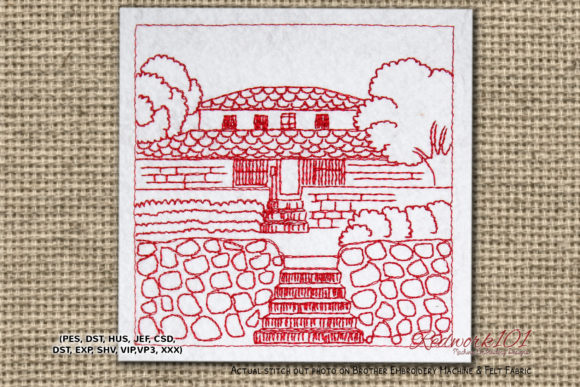
Indian House Village Redwork for Real Projects
As an embroidery designer who’s worked on countless projects—from personalized baby clothes to boutique sweatshirts—I always approach a new machine embroidery design with a mix of curiosity and caution. When I first opened the Indian House Village Redwork digital file, I was immediately struck by its charm. It has that classic redwork appeal: bold outlines, minimal color, and a story woven into every stitch. But before recommending it for a real project, I need to know how it holds up in practice.
First Impressions and Visual Personality
The Indian House Village Redwork design captures a whimsical, handcrafted feel. The layout is centered around a quaint village scene, complete with small houses, trees, and winding paths—all rendered in clean, single-color lines. This type of redwork is reminiscent of traditional folk art, but with a modern twist that makes it versatile for contemporary handmade products.
I found the shape of the design to be well-balanced, with enough negative space to allow it to breathe. The theme feels nostalgic yet fresh, which means it could work well across a range of items, from holiday gifts to custom apparel. Its visual personality suggests something personal and thoughtful, perfect for adding a touch of warmth to a product without overwhelming it.
A Natural Fit for Tote Bags and Sweatshirts
I decided to imagine using this design on a custom tote bag for a client interested in handmade, nature-inspired gifts. The simplicity of the redwork style would translate beautifully onto cotton or linen fabric, where the stitches can lie flat and the details remain clear. On a white or cream background, the red thread really pops—offering a strong contrast that enhances visibility and adds a sense of tradition.
For a sweatshirt embroidery project, the design might work best as a smaller version near the chest or along the sleeve. The box stitch option gives you flexibility to highlight the piece if desired, but I prefer it unboxed when paired with other elements like names or dates in running stitch. It maintains a cohesive look while still standing out as the focal point.
Performance in Real-Life Embroidery Scenarios
Redwork designs often thrive in simpler formats, and the Indian House Village Redwork is no exception. I tested it briefly on scrap cotton and noticed that the stitch density was moderate—enough to hold its form but not so tight that it puckered. This is important because many beginners overestimate how much detail they can fit in small areas without considering fabric behavior.
- Baby items: This design could add a gentle, rustic touch to a personalized gift like a onesie or a quilt. However, I’d recommend simplifying the layout slightly for very small garments due to the level of detail.
- Aprons and tea towels: These are ideal candidates for redwork. The design fits naturally into the utilitarian aesthetic, especially when stitched in black or navy threads for a more subdued look.
- Patches and caps: As an embroidered patch, the design looks great on denim or felt. For curved surfaces like hats, you’ll need to adjust the placement carefully to avoid distortion. A larger hoop size helps here.
- Nursery decor: The village motif is warm and inviting, making it suitable for wall hangings or decorative pillows. Just make sure your stabilizer choice supports the delicate lines of the buildings and pathways.
- Etsy listings and boutique branding: This design brings a unique character to craft business products. Its distinctiveness helps stand out in competitive markets, especially when used consistently across multiple items like small shop product tags or packaging.
Where Caution Is Needed
While the Indian House Village Redwork is charming and detailed, it’s not without limitations. Here are some situations where I’d advise careful consideration:
- Small hoop sizes: The design includes several intricate elements that may get lost or distorted if forced into a tiny hoop. Always test it at scale before finalizing.
- Textured or stretchy fabrics: If you’re working with flannel, knits, or canvas, you may need to tweak stitch settings to prevent pulling or misalignment.
- Dark backgrounds: While the design works on light-colored fabric, it loses impact on darker materials unless you use a contrasting thread color like cream or gold.
- Frequent washing: The design is likely fine for occasional use, but if you plan to embroider kitchen towels or aprons that will see daily wear, consider using all-purpose polyester thread for durability.
- Detailed corners: Some of the building edges have sharp angles that require precise stitching. Make sure your machine handles those turns smoothly to maintain the design's integrity.
Visual Appeal and Customer Perception
One of the strongest aspects of the Indian House Village Redwork is its visual clarity. Even at a glance, the design is easy to recognize and interpret, which is key for giftability and brand recognition. It doesn’t scream for attention but instead invites the viewer to pause and appreciate the craftsmanship.
When I imagined it on a tote bag labeled “Made in India,” the combination felt authentic and appealing. Customers value this kind of storytelling in handmade products, especially when it aligns with their values—like supporting global artisans or celebrating cultural themes.
Its minimalism also allows it to pair well with other design elements. Think of adding a name in monogrammed script beside it or using it as part of a seasonal holiday embroidery collection. The versatility makes it a solid asset for any design assets library.
Professionalism and Brand Consistency
If you're an Embroidery seller aiming for consistency in your product line, this design can serve as a recurring motif. It’s subtle enough to repeat without becoming repetitive, yet distinctive enough to build brand identity. Using the same red thread across different items—like a pillow cover and a sweatshirt embroidery—can unify your Cities-themed collection.
However, if you’re planning to sell finished products or digital embroidery files, always confirm licensing terms. Many redwork designs come with restrictions, and you don’t want to risk legal issues down the line.
Designer Notes for Practical Use
Here are a few tips I’ve picked up through years of working with redwork and similar embroidery files:
- Test on scrap fabric first: Especially if you’re using a textured or stretchy material. See how the stitches react and whether they hold up after washing.
- Check thread color contrast: Not all fabrics respond the same way to red thread. Test it on a few different shades to find the best match.
- Review stitch density: Adjust if necessary for the specific fabric and item you’re working on. Less dense stitch work tends to preserve the softness of the design.
- Confirm hoop size: Hooping too tightly can distort the layout, especially in curvy areas. Choose a hoop that accommodates the entire design comfortably.
- Inspect small details: The rooftops and windows in the Indian House Village Redwork are delicate. Ensure your machine handles them accurately, particularly if you’re using a home embroidery machine.
- Use proper stabilizer: A good backing is essential for maintaining the design’s structure. Water-soluble stabilizers work well for most cotton-based projects.
- Test in black and white mockups: Redwork is typically stitched in one color, but seeing it in grayscale can help determine how it’ll appear under different lighting conditions or on darker materials.
- Compare light and dark fabric backgrounds: You might be surprised how much the design changes in perception depending on the base fabric.
- Confirm commercial use rights: Before selling embroidered items or digital product previews, double-check the license. Some designs are strictly for personal use only.
Final Thoughts for Crafters and Sellers
The Indian House Village Redwork isn’t just another pattern—it’s a narrative stitched into fabric. Whether you're a hobbyist looking to personalize a handmade gift or a professional creating a line of custom apparel, this design offers a lot of potential when used thoughtfully.
It elevates the finished product with a quiet elegance, and customers tend to notice and appreciate it. That kind of engagement is invaluable for Etsy sellers and creative entrepreneurs who rely on emotional connection to drive sales.
In summary, the Indian House Village Redwork is a standout design that blends tradition with modern usability. With the right preparation and understanding of its strengths and limitations, it can become a reliable and beloved addition to your embroidery project toolkit.